
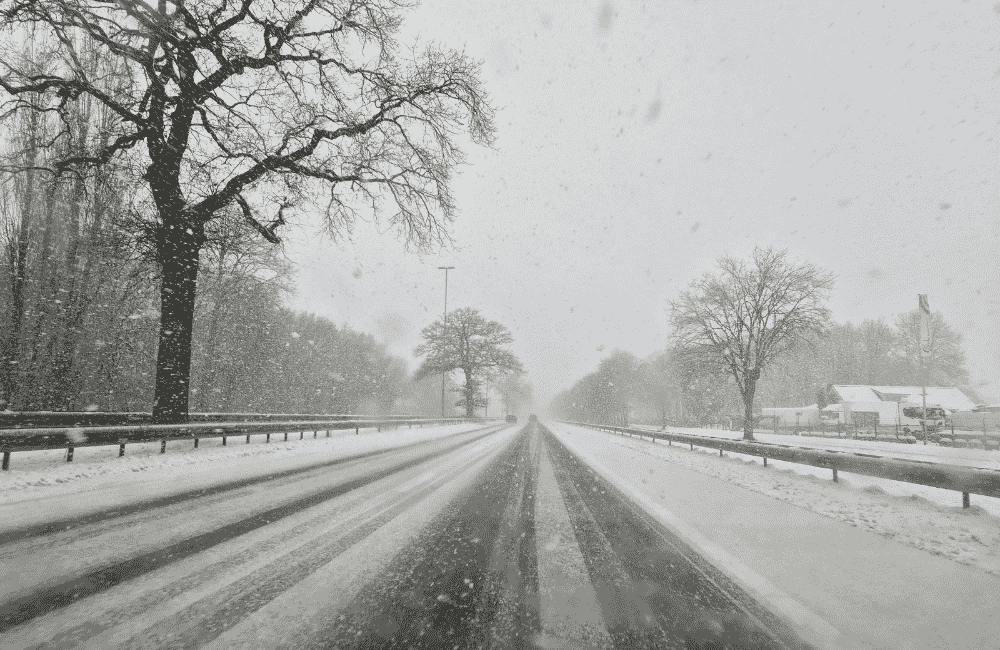
It’s that time of year again!
Winter and early spring can put athletic departments in a predictable bind. Roads freeze, buses get delayed, officials get stuck, and families want an answer before they leave work. Rarely is the problem the cancellation itself. It’s the messy hour after the decision when coaches, families, officials, and your front office all hear different versions of what is happening.
A clean cancellation process has two jobs: It protects safety, and it protects trust. NFHS event management guidance emphasizes preparation, organization, and communication as the backbone of smooth operations.
Step 1: Set a decision owner and a fixed decision window
If people don’t know who decides, they’ll decide for you.
Pick one primary decision owner for contest status and identify a backup. Put both names in your coach handbook and preseason meeting notes. The lightning safety guidance used by state associations calls for identifying who monitors conditions and determines when to suspend activity.
Next, set decision windows that match the reality of travel and staffing. A simple model from a district winter cancellation policy uses clear time targets, including a firm call time of 1:00 p.m. for evening events, 7:00 a.m. for morning events, and a four-hour window for afternoon events.
Those windows work because they respect bus dispatch, visiting team travel time, and working families.
Step 2: Use a two-stage timeline so you do not go silent
Silence creates rumors, so replace it with a predictable update cadence.
Use two stages:
Stage A: Heads-up window
- Send a short “status watch” note when you see a credible risk.
- Tell people when the next update is coming.
Stage B: Final call window
- Send the decision by the pre-set deadline.
- Include the next step for each group.
That is how you keep coaches from telling athletes “We are probably playing” while your front office is preparing a cancel notice.
Step 3: Build decision criteria that you can explain in one sentence
Your criteria do not need to be complicated, and they should be defensible.
For weather-driven calls, the National Weather Service pushes the “30-30 rule” as a simple public standard. Seek shelter when lightning-to-thunder time is 30 seconds or less, then wait 30 minutes after the last lightning before leaving shelter. Many state association guidelines mirror the same “suspend and wait 30 minutes framework” and also note that lightning apps can assist, while thunder or visible lightning carries priority.
For winter travel, many district policy examples center the decision on two questions: Can the visiting team travel safely, and can local athletes and spectators travel safely? That is an easy sentence to repeat if and when pushback starts.
Step 4: Stop mixed signals with one source of truth and one sequence
Mixed signals happen when every coach becomes a broadcaster.
Pick one public source of truth and stick to it:
- A single webpage, or a single landing post, updated first
- A single outbound channel you control, like your district notification system or an Informz alert email
Then use a sequence that always moves in the same order. Here is a clean four-step sequence that prevents the “coach texted before the district did” problem:
- Opponent AD and officials assigner
- Coaches and building admin
- Families and students
- Front office and any public-facing staff who answer phones
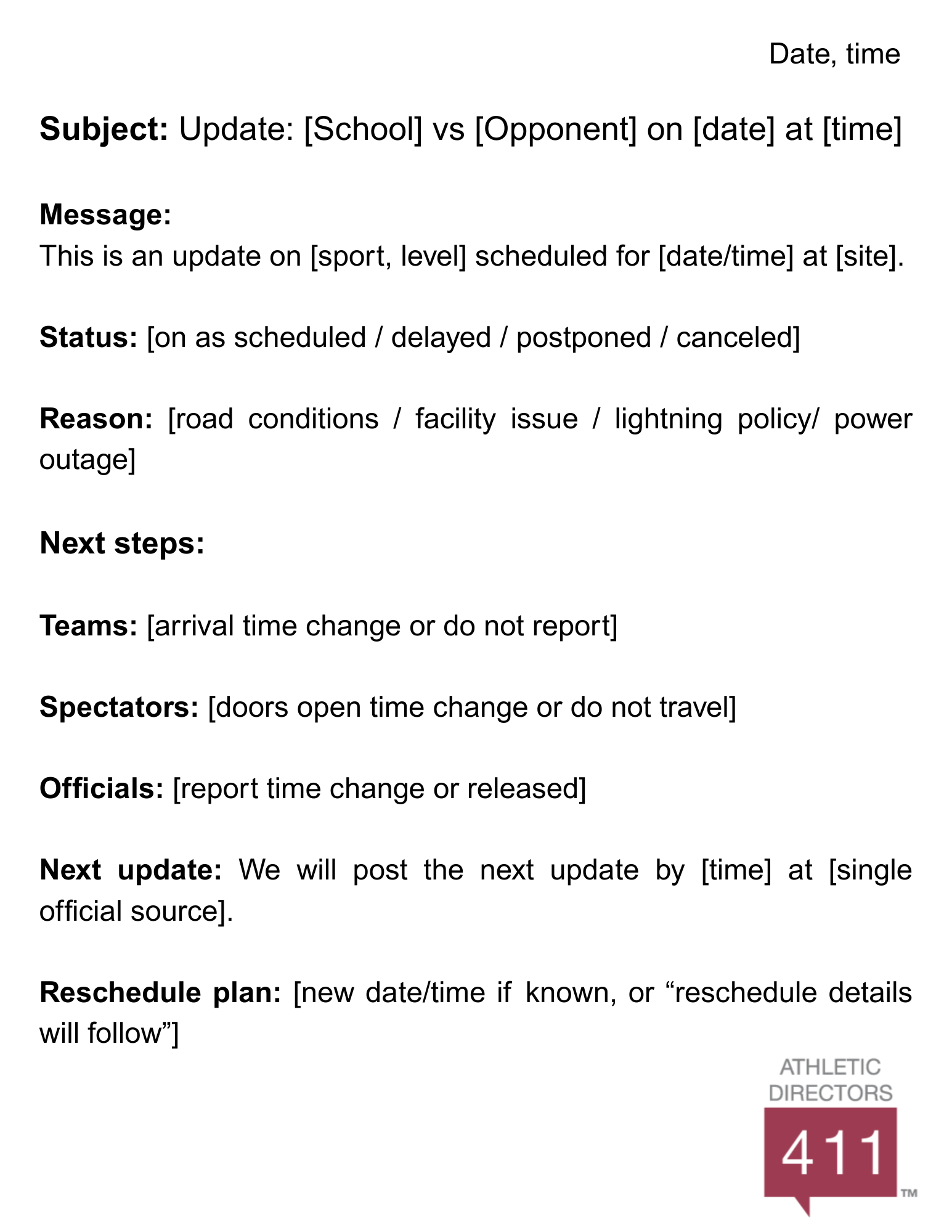
The message template you can reuse
This template is written so it works for email, text, and a website update. It is short enough to copy into a district call system script.
Two small details that save you an hour later
Put a timestamp on every update. People screenshot old posts and forward them all night. A timestamp reduces confusion.
Name the policy when relevant. For lightning, referencing the 30-minute restart rule gives you a safety anchor that is easy to defend; for inclement winter weather, cite district rulings and safety concerns.