
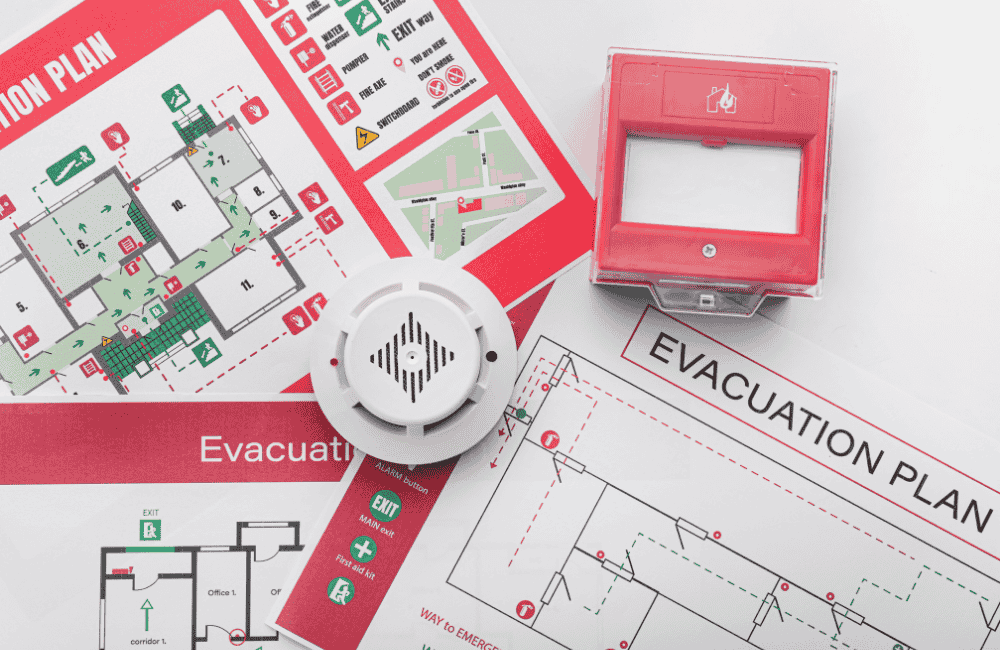
When was the last time you updated your Emergency Action Plan (EAP)? Emergencies can happen anytime, and even a well-crafted EAP needs regular review and improvement to ensure your athletes, staff, and spectators are protected.
Here’s how athletic directors can take an existing EAP to the next level to enhance safety and compliance while ensuring your team is truly prepared when seconds count.
1. Review for Completeness and Clarity
Revisit your EAP to ensure it includes:
- Roles and responsibilities – Are the right people assigned to specific tasks? Have there been staff changes that require updates?
- Emergency equipment locations – Is equipment like AEDs and spine boards clearly marked and easily accessible?
- Venue-specific directions – Does the plan include clear instructions and maps for EMS entry and nearest hospitals for each venue?
- Communication protocols – Is your call tree current, and does everyone know who to contact and when?
The NATA recommends annual reviews of EAPs, ensuring they reflect current staff, equipment, and facility changes.
2. Incorporate Feedback and Real-World Learnings
After drills or real incidents:
- Debrief with your team to identify what worked and what needs improvement.
- Document observations such as equipment delays, unclear roles, or communication issues.
- Update your EAP promptly based on these findings.
Facilities like Quincy College and Alabama A&M regularly assess and refine their EAPs using feedback to close gaps and strengthen response protocols.
3. Increase Staff Training and Comfort
An EAP is only as effective as the people executing it:
- Schedule annual drills – Include all coaches, athletic trainers, administrators, and venue staff.
- Rotate emergency scenarios (cardiac arrest, head injury, severe weather) to build confidence.
- Use realistic drills, like practicing AED retrieval and use within a set time, to reduce panic during real emergencies.
As emphasized by the NFHS, practice is what makes your plan actionable when seconds matter most.
4. Communicate and Post the Plan
An EAP hidden in a binder won’t help in a crisis. Ensure:
- All staff know where to find the plan digitally and physically.
- Key information (e.g., AED location, EMS access points) is posted in locker rooms, training rooms, and near venue entrances.
- New staff receive EAP training during onboarding.
5. Collaborate with Local Emergency Services
Strengthen your EAP by inviting local EMS to participate in drills and review your plan. This ensures:
- They are familiar with your facilities.
- Response times are optimized.
- Potential challenges, like venue access or communication delays, are addressed proactively.
6. Document and Comply
Keeping accurate records of drills, updates, and training ensures:
- Your program meets state and national standards.
- Your department demonstrates a proactive approach, reducing liability risks.
- You have a clear improvement record to share with administrators and parents.
A Living Document, Not a One-Time Task
Your EAP should evolve as your facilities, staff, and event needs change. A strong EAP reflects your commitment to student-athlete safety and positions your department as a leader in risk management.
The new school year begins sooner than you think — review, refine, and rehearse to ensure your department is ready when emergencies arise.