

Many athletic departments overlook one of the simplest opportunities to strengthen their programs: hosting youth sports camps. With the right planning and organization, these camps can become a valuable part of an athletic department’s yearly calendar (and revenue!) while providing young athletes with meaningful opportunities to learn and develop.
Why youth camps work
Sports camps offer benefits that extend well beyond a few days of instruction:
First, sports camps can be one of the easiest ways to fundraise for your department. You most likely already have access to the facilities and equipment needed, as well as coaches and student-athletes who can lead the camp, so registration fees cover operational costs and can generate additional revenue for travel, uniforms, equipment, or facility upgrades. Depending on how long the camp is, expenses needed, and price points chosen, you have the potential to generate a large revenue.
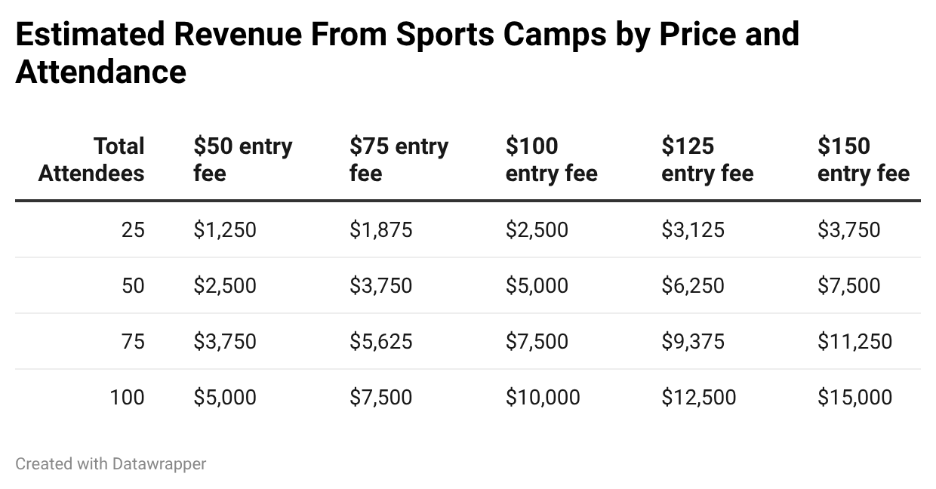
Next, camps help promote the program. Whether you’re hosting camps at a college or high school level, young athletes and their families gain direct exposure to the school, the coaching staff, and the program culture. For high schools, camps help build relationships with local youth leagues and middle schools. For universities, they can introduce prospective athletes to campus and create early interest in the program.
Finally, camps also allow coaches to observe emerging talent in a relaxed training environment. While universities may use these camps to scout and recruit, this is still a great opportunity for high schools to see how young athletes respond to instruction, interact with peers, and approach skill development.
Planning a successful camp
The most successful camps begin with a clear structure:
- Determine the target age group and skill level. Some programs offer beginner camps focused on fundamental skills, while others provide advanced sessions for competitive athletes. Some camps may be for K-5 students, some for middle schoolers, and some for high schoolers (universities only). Ambitious athletic directors may hold multiple camps of the same sport to accommodate all ages and skill levels.
- Scheduling is another important decision. Many schools host camps during the summer when athletes have fewer academic commitments, though shorter camps during school breaks or weekends can also attract strong participation. Also, plan how long your camps will be: Single-day camps are popular, but camps can be held over a multiple-day period as well.
Registration should be simple and accessible. Online sign-ups, clear pricing, and early promotion through school channels and community leagues promote strong attendance. You can also reach more people by putting information on the athletic department website and sharing it through social media.
Involving current student-athletes
One of the easiest ways to strengthen a camp is by involving your current athletes. Many programs use student athletes as instructors or assistants for these events, and this benefits everyone involved. Younger campers enjoy learning from older players they can look up to, and student-athletes get the chance to build leadership and communication skills. Their presence also helps create a genuine connection between camp participants and the program.
Building the right camp experience
The goal of a youth camp is skill development combined with a positive experience.
A typical camp might begin with fundamental drills and small group instruction, and end with controlled scrimmages or games. Short teaching sessions can cover topics like teamwork, preparation, or conditioning. Younger athletes tend to benefit from a fast-paced environment with varied activities that keep them engaged.
Strong supervision is needed in these situations. Camps should maintain appropriate staff-to-camper ratios and make sure that all staff understand safety procedures. For the event to run smoothly, it helps to have a clear schedule, move campers from one activity to the next in an organized way, and keep everyone informed throughout the day.
Turning camps into program tradition
Consistency is what ultimately makes youth camps successful. By hosting camps annually or multiple times each year, you can build strong reputations within your community, and families will begin to view your department as a reliable opportunity for development and engagement. Over time, those relationships with families and young players can grow into something even more valuable: a pipeline of future players who already feel connected to the team.